

Dental Implants
If you’re missing a tooth, it’s important to fill the gap. A missing tooth is more than just a cosmetic concern; it can also lead to functional issues over time, as open spaces can make it easier for bacteria to collect, increase the risk of infection, affect how you chew or speak, and cause nearby teeth to shift out of alignment.
In situations like these, our Austin dentists often recommend dental implants. These durable, natural-looking restorations are created to look, feel, and function exactly like real teeth. When placed and restored by an experienced oral health professional, the treatment can provide significant benefits for both your smile and your overall oral health.
Read on to learn more about dental implants!
- What Are Dental Implants?
- Dental Implant Benefits
- Dental Implant Candidates
- Dental Implants vs. Crowns
- Types of Dental Implants
- Dental Implants Procedure
- Dental Implants Results
- Dental Implant Maintenance
- Dental Implants Safety
- Dental Implant Alternatives
- Dental Implants Cost
- Choosing an Implant Dentist
- Additional Dental Implant FAQs
What Are Dental Implants?
Dental implants are sturdy, lifelike tooth replacements that can restore the entire structure of each missing tooth – from the visible portion down to the root. Each implant consists of a titanium post, which is surgically placed into the space where the tooth root once was. Then a restoration, such as a dental crown or denture, is affixed to the top to complete the structure of the artificial tooth.
What Are the Benefits of Dental Implants?
Dental implants can offer a wide range of benefits for patients with missing teeth. Because they’re securely fixed in place, implants allow you to eat, speak, and smile with confidence – without worrying about movement or extra maintenance. They also help preserve jawbone health and maintain the proper alignment of surrounding teeth. For many patients, dental implants provide optimal comfort, confidence, and a natural-looking smile that feels complete again.

- Custom Designed
- Permanently Affixed
- No Slippage
- No Extra Maintenance
Am I a Dental Implant Candidate?
Candidates for dental implants should have the following:
- One or more missing teeth
- Adequate bone density in the jaw to accommodate the implant
- Fully developed jawbone
- Gum tissue that is reasonably healthy
- No medical conditions that can complicate post-surgery healing
- No current chemotherapy or radiation treatment
While these traits often describe a good candidate for dental implants, your dentist will examine your jaw structure and medical history to determine whether you’re qualified to undergo the procedure. If you qualify, we’ll place the implant or implants, and a dental crown or other restoration will be custom-designed and crafted to provide the finishing touch.
“You may have trouble distinguishing between the dental implant and your natural teeth!”

Dental Implants vs. Crowns
When considering how best to restore a damaged or missing tooth, both dental implants and crowns play important roles – but they address different needs. A dental crown is a custom-made cap that fits over a natural tooth to restore its shape, strength, and appearance. Crowns are often used after a large filling or a root canal to protect the remaining tooth structure. While they can be an excellent solution when the underlying tooth is healthy and still present, they can’t replace an entire missing tooth on their own.
In many cases, implants and crowns work together: the implant serves as the foundation, and a beautifully crafted crown completes the restoration with a natural look and feel. At Austin Dental Spa, we’re proud to use the state-of-the-art CEREC® system to create lifelike, metal-free crowns in a single visit.
What Are the Different Types of Dental Implants?
The dental implant procedure can be performed to replace a single tooth or to support a restoration replacing multiple teeth. Depending on your unique needs and qualifications, your dentist will recommend a solution that can provide the best possible results.
Single Tooth Implants
If you’re missing one tooth, a single tooth implant may be your ideal solution. Whether you have lost the tooth from trauma, gum disease, or another cause, an implant is the restoration most similar to your natural tooth. After your dentist places the titanium implant post into the space of the missing tooth, this will gradually fuse with the surrounding bone. Once this stage is complete, a custom CEREC® crown is created and affixed to the implant. These crown restorations are designed for the most precise and accurate fit possible, and the crown is color-matched to your surrounding teeth. The crown provides the final touch to your dental implant. Once it is placed, you may have trouble distinguishing between the dental implant and your natural teeth!
Single Tooth Implants vs. Bridges
More and more people are discovering the significant benefits of replacing a missing tooth with an implant versus a traditional bridge. Beyond their natural-looking appearance, dental implants hold structural advantages that bridges do not. For example, bridges entail an artificial tooth that requires the support of the adjacent teeth, which alters your otherwise healthy teeth. By opting for an implant, you are choosing a standalone replacement.
In addition, a single tooth implant has the ability to help prevent bone loss. Since the titanium post replaces the natural tooth root, the jawbone continues to be stimulated. As a result, it does not recede like when only the exposed part of the tooth is replaced. This long-term benefit helps you retain your facial contours to avoid the sunken-looking appearance that can develop over time due to a lost tooth.
Implant-Supported Bridges
For those missing about two or three teeth adjacent to each other, an implant-supported bridge may be recommended. With this option, a dental implant is not used to replace each individual tooth. Instead, two implants are typically used to replace the outer missing teeth, with an artificial tooth “bridging” the gap in between.
Since implant bridges are secured by titanium posts, they offer a more secure teeth replacement option compared to traditional bridges. Additionally, implant bridges offer the extra benefit of helping reduce jawbone recession, since the implant posts are replacing the natural root of two of the missing teeth.
Implant Dentures
If you are missing an entire set of teeth, you may be a good candidate for implant-supported dentures. This procedure is similar to placing an implant for a single tooth, with an implant post first being surgically inserted into the space of the missing tooth root. However, the implant denture process differs in that multiple dental implants are strategically placed with the purpose of securing a denture as the restoration.
Implant dentures can be a great option for those missing several teeth who want a more stable teeth replacement compared to traditional dentures. The option is often viable for those who may not be good candidates for multiple dental implants, such as from inadequate jawbone density. By affixing a denture to implants that have become a permanent part of the mouth, patients can expect a number of advantages over traditional dentures.
What Does the Dental Implant Procedure Involve?
Step 1: The Planning Process
To begin your dental implant process, our team will evaluate your oral structures to determine your candidacy for the procedure. If you prove to have enough jawbone to support a dental implant and are otherwise a good candidate, we will begin planning the details of your surgery using state-of-the-art dental technology.
Step 2: Placing the Dental Implants
During the implant procedure, we’ll place a titanium post where your tooth root used to be. Over the course of about three to six months, this post should eventually fuse to your jawbone and become a permanent part of your mouth, just like the original tooth. During this time, you’ll wear a temporary restoration until you return to our office for your permanent restoration.
Step 3: Attaching the Final Restoration
After your implant has completely fused with your jawbone, you’ll return to our office for the completion of the process. At your final visit with our team, a custom-crafted restoration will be securely affixed to the implant, providing you with lasting results that look and feel very natural.
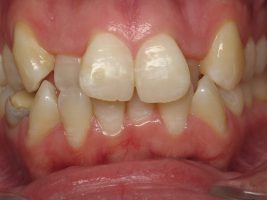
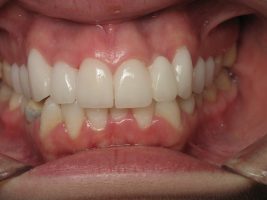
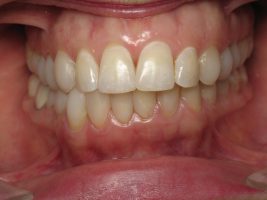
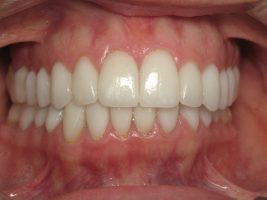
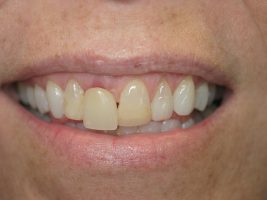
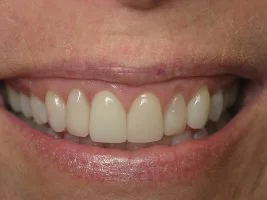
Dental Implants Before & After Photos






How Long Do Dental Implants Last?
Dental implants can last for decades – if not one’s entire lifetime – when cared for properly. Since the implant posts fuse to the jawbone, they become a permanent part of the mouth. The restorations that are attached to the top of the implant posts, however, are more prone to wear and tear from years of use. As a result, a crown, bridge, or denture that has been supported by implants may need to be replaced after several years.
How Do I Take Care of My Dental Implants?
Maintaining dental implants does not usually require any special care other than routine brushing, flossing, and dental cleanings. Depending on the type of restoration you receive, your dentist will explain how you can take care of them to ensure they stay in good shape and last as long as possible.
Are Dental Implants Safe?
Throughout decades of innovation1, dental implants have become a highly advanced and effective solution for replacing missing teeth. The material typically used in implant posts is biocompatible, allowing the bone to fuse to the jawbone with minimal risk of complications. When placed by a qualified implant dentist, implants are considered a safe option with an extremely high satisfaction rate.
Are There Any Alternatives to Dental Implants?
If you are not a candidate for the dental implant procedure, or would prefer a less invasive option, our dentists may recommend an alternative solution. While dental implants are the preferred teeth replacement option whenever possible, some individuals are better suited for traditional restorations, such as a bridge or removable denture. In many cases, patients are eligible for implant-supported bridges or dentures as opposed to replacing each tooth with its own dental implant. To learn which dental implant alternatives are appropriate for your needs and lifestyle, please schedule a consultation.
How Much Do Dental Implants Cost?
On average, the cost of a single tooth implant is about $3,000 to $4,500; however, a number of factors will affect your total cost, such as if additional work needs to be done. Although dental implants may have a higher upfront cost compared to other tooth replacement options, they’re typically more economical in the long run. Bridges and traditional dentures often need to be replaced the longer you have them, whereas dental implants are designed to be a permanent solution.
To get a personalized quote for your implant and restoration process, you will need to schedule an appointment to undergo an oral evaluation. Once a customized treatment plan has been created based on your unique needs, you’ll have the chance to review your cost quote. If you wish to make your dental implant procedure fit more comfortably within your budget, our team offers financing options that can divide your total cost into more manageable monthly payments. Reach out to us for more information about these financing options and to determine whether you qualify.
Why Choose Austin Dental Spa for Dental Implants?
Choosing the right provider for dental implants is just as important as choosing the treatment itself. Dental implants are, after all, an investment in your smile!
At Austin Dental Spa, our approach combines advanced technology, thoughtful planning, and a strong focus on comfort and aesthetics to help patients achieve results that feel as good as they look. We take the time to fully evaluate your oral health, bite alignment, and smile goals before recommending dental implants.
Comfort is also a key part of the experience at Austin Dental Spa. From our spa-like environment to sedation options, we strive to make every step of the implant process as smooth and stress-free as possible.
When you choose Austin Dental Spa for dental implants, you’re choosing a team that values precision, comfort, and beautiful outcomes at every stage of care.
Additional Frequently Asked Questions
Do dental implants look natural?
Once your dental implant is placed, you may have trouble distinguishing between the implant and your natural teeth!
What are dental implants made of?
Dental implant posts are typically made from titanium in the shape of a small screw. Having been used in dentistry for several decades, this durable metal is often the material of choice for dental implants, as it is biocompatible, preventing adverse reactions from the body. The titanium posts allow the surrounding jawbone to fuse with a high rate of acceptance, ensuring a strong foundation for the final restoration.
Does dental implant surgery hurt?
We strive to make your dental implant procedure as comfortable and painless as possible. A local anesthetic will be used to numb the area so you have minimal discomfort during surgery. You may feel some pressure, but this typically does not bother most patients. As the numbing agent wears off, you may experience some tenderness and discomfort.
To further help you relax throughout the duration of your surgery, you can opt to receive a sedation dentistry technique, such as nitrous oxide, oral-conscious sedation, or IV sedation. We would be happy to discuss these options prior to surgery to help you decide if sedation is right for you.
How long does dental implant surgery take?
The dental implant procedure can take several hours, which will depend on the number of implants you are receiving and if any preliminary work is needed, such as a tooth extraction or bone grafting. The dental implant process may also involve multiple appointments to complete the different stages of your procedure. Your dentist will provide a more personalized timeline of your dental implant surgery during the initial planning process.
What side effects are associated with dental implants?
Dental implant surgery comes with risks, which is why our dentists will only recommend the procedure if we determine you are a good candidate. We take every precaution to ensure your safety throughout the process, planning your procedure with the utmost precision. You’ll be provided with post-operative care instructions to help you navigate the healing process and understand what to expect.
Common side effects after dental implant surgery include bleeding, swelling, and bruising. Although rare, it’s also possible to develop complications such as infection, nerve damage, and implant failure. Our team will go over your risks before surgery to ensure you’re well-informed about these risks and how to prevent them.
How many dental implants will I need?
The number of dental implants you need will be based solely on your unique situation. Each procedure is different and your treatment plan will be tailored to meeting your goals. Some have found success using one implant while others have needed multiple to replace multiple teeth. Based on your needs, you can either utilize single-tooth implants, implant bridges to address two or three teeth, or implant dentures to replace even more teeth.
Are there certain foods I should avoid with dental implants?
After receiving your dental implants, there will be a healing process that takes place and an adjustment period for you to get used to your new teeth. Dental implants are often a preferred choice because there are no diet restrictions that people typically need to adhere to. That said, we will advise you to maintain a diet that consists of mostly soft foods immediately after your procedure in order to allow your mouth to heal properly. Going forward, you may also want to be cautious when eating hard foods in order to avoid any unnecessary damage to your restoration.
Can I smoke with dental implants?
If you’re a cigarette smoker, we highly recommend you quit before getting dental implants. Smoking can wreak havoc on implants (not to mention your oral health in general) in a plethora of ways. For one, it can slow down the healing process by impairing blood flow. Additionally, it can cause gum disease, which can compromise the implants’ stability. Moreover, smoking with dental implants can increase your chances of implant failure, which we’ll explain in more detail below.
What is implant failure?
While dental implants have a high success rate, there are instances where they may fail (i.e., the jawbone rejects the implant and no fusion takes place).2 In addition to smoking, certain phenomena can cause implant failure, such as insufficient jawbone density, gum disease, infection, or poor oral hygiene. Please keep in mind that implant failure is considerably rare when the patient closely follows aftercare instructions and takes excellent care of their teeth. As always, it helps when the treatment is performed by an experienced dentist.
When is it too late to get dental implants?
There’s no general age limit for dental implants; however, when a certain amount of bone density is lost over time, getting implants may no longer be the best option. There are methods to circumvent these issues through bone grafting procedures, which allows for patients without sufficient jawbone density to still receive dental implants. Patients can also seek out alternatives to dental implants such as crowns, bridges, or dentures.
Will I need a bone graft before dental implant surgery?
Bone grafting is not necessary for every person who seeks out dental implants; rather, it’s limited to those who don’t have sufficient jawbone density to support the restoration. During the initial consultation, our team will review your teeth and determine whether you may need a bone graft in order to proceed with the procedure.
Are Dental Implants Right for You?
Our team can help you maintain the integrity and beauty of your smile for years to come with dental implants and restorations. If you are interested in strengthening your smile with dental implants, we can take care of all your implant needs. To get started, please contact us to schedule an appointment.